
Key Takeaways:
Expansion joints on the building envelope must stay flexible to handle structural movement and prevent water leaks.
A high-performance façade sealant provides long-term protection against moisture, air leakage, and dirt.
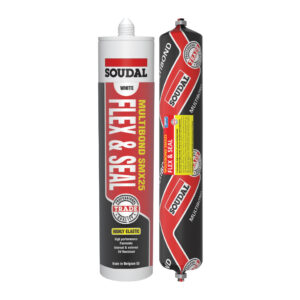
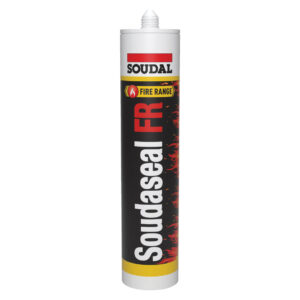
Our Australian range includes SMX25 Flex & Seal, Soudaseal FR, and Soudaflex 20LM to deliver exceptional adhesion for residential and commercial façades.
Combining these sealants with expanding foam in the cavity provides added thermal insulation and structural stability.
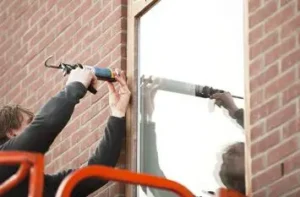
Building Envelope Expansion Joints
Flexibility and strong adhesion are the two most critical factors when sealing expansion joints across a building envelope. The joints around windows, between façade panels, and at transitions between different materials experience constant stress. Daily temperature changes, heavy winds, and natural structural settling force these joints to expand and contract. Without a premium sealant, this movement causes the seal to crack or pull away from the edges. This leads to air leaks and moisture ingress that ruin the building’s energy efficiency.
We design our façade sealants to absorb this movement and protect the structure. SMX25 Flex & Seal provides massive elasticity and weather resistance. It’s the perfect choice for exterior applications exposed to high environmental stress. If your commercial project requires a fire rating, Soudaseal FR offers a certified fire-resistant barrier that still accommodates joint movement.
For professional construction joints, Soudaflex 20LM is our dedicated low-modulus polyurethane sealant. It provides brilliant adhesion to concrete, aluminium, and PVC window frames.
To get the best result, use a high-quality expanding foam behind the sealant to fill deep cavities. This provides thermal and acoustic insulation between the moving structural elements. Together, the foam and sealant create a continuous, weatherproof barrier that protects the building envelope for decades.
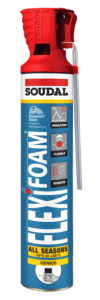
Behind the sealant, Soudal Flexifoam can be used to fill cavities or gaps, providing thermal and acoustic insulation between moving structural elements. Together, these products ensure a continuous, weatherproof seal that maintains the integrity of the building envelope over time.
FAQs
What is an expansion joint in a building envelope?
An expansion joint is a designed gap between building materials. It allows the materials to expand and contract with temperature changes or structural settling without cracking. You must fill these gaps with a highly flexible sealant to keep the building weatherproof.
Why do expansion joints fail?
Joints usually fail for three reasons. The installer used a rigid sealant that couldn’t handle the movement, the joint was dirty before application, or the sealant was applied too deeply without a backing rod.
Can I use standard silicone for exterior façade joints?
While silicone is waterproof, it’s often not the best choice for large commercial expansion joints because you cannot paint it. Polyurethane sealants like Soudaflex 20LM or SMX polymers like SMX25 Flex & Seal offer better tear resistance, excellent movement accommodation, and can be overpainted.
What does "low modulus" mean?
A low modulus sealant, like Soudaflex 20LM, requires very little force to stretch. As the building joint widens, the sealant stretches easily without pulling hard against the concrete or brick edges. This prevents the substrate from breaking under tension.