
Key Takeaways:
Use non-corrosive electrical silicones to safely seal and insulate around your outlets and conduit boxes.
Adhesive expanding foams provide a secure bond and fill gaps for a tight fit.
Our range offers fast-curing and airtight options across manual, straw, and gun-grade formats.
These products are ideal for installations in walls, ceilings, and switchboards where precision matters.
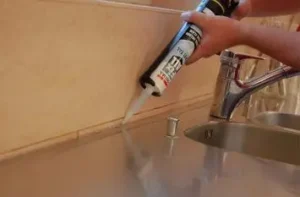
Sealing Joints in Natural Stone
Natural stone surfaces like marble, granite, and sandstone look brilliant on floors, walls, and bathrooms. But these materials are highly porous. If you use standard sealants, the silicone oils and plasticisers migrate into the tiny capillary channels of the stone. This causes a dark, permanent stain along the edge of the joint that you cannot clean or remove.
You must use a sealant specifically formulated for natural stone to protect your finish. We design our neutral-cure silicones and hybrid polymers to stop this oil migration completely.
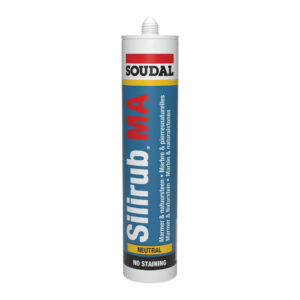
If the appearance of the stone is critical, Silirub MA is our dedicated silicone for premium natural stone applications.
International Standard Tests
There is a strict international standard for testing sealant stains on natural stone known as ISO 16938-1. This is a critical compression test that forces the sealant against the porous material under high pressure. If a product passes this test, it guarantees a non-staining result. We test our specialist sealants on highly sensitive materials like Carrara marble and Belgian Blue stone to ensure they meet this standard. You will always find this certification listed on the Technical Data Sheet of our stone-safe products.
Ready to start your project? Use our Store Locator to find your nearest Soudal stockist and grab the right natural stone tools today.
FAQs
How do I prepare natural stone for sealing?
Porous stone must be completely free of dust. Use a vacuum with a brush attachment to clear the joint. Avoid using harsh chemical cleaners, as the stone will absorb them and reject the new sealant. Ensure the gap is bone dry before you apply the product.
Why does standard silicone stain marble and granite?
Standard silicones contain plasticisers and unreacted silicone oils. Because natural stone acts like a hard sponge, it sucks these oils out of the silicone over time. This creates a permanent dark shadow around the joint that ruins the look of the stone.
How do I smooth the joint without making a mess?
Apply the sealant carefully and then dip a professional finishing tool into a soapy solution. Run the tool along the joint once with steady pressure. Do not spray the solution all over the stone, as this makes the surface incredibly slippery and prevents any missed sealant from adhering properly.
Can I paint over stone sealants?
If you use a silicone-based product like Silirub MA, it is not paintable. Always check the specific product label before you plan to paint.