
Key Takeaways:
Chemical anchoring provides a stress-free bond that doesn’t put expansion pressure on the substrate.
Resin-based systems allow for higher load capacities by spreading force across the entire hole surface.
Our range is ETA-certified and C1-rated for seismic performance in cracked and uncracked concrete.
Products like Soudafix VE400-SR work in wet conditions to ensure site reliability year-round.
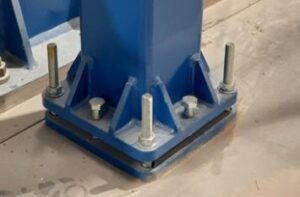
What is Chemical Anchoring?
Chemical anchoring is the preferred choice for heavy-duty fixings that require maximum structural integrity. Unlike mechanical bolts that expand and create pressure, chemical systems use a two-part resin to bond the fixing directly to the concrete or masonry. This creates a uniform hold that doesn’t stress the surrounding material. It’s especially useful for brittle substrates like stone or hollow brick where traditional expansion might cause the material to crack or blow out.
We design these systems for precision and adaptability. You can adjust the anchoring depth to meet the specific load requirements of your project. This makes them ideal for safety-critical tasks like installing heavy machinery, balustrades, or structural steel.
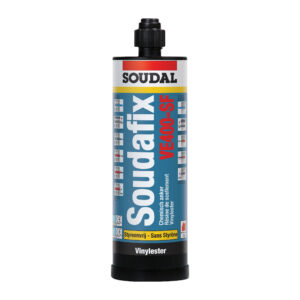
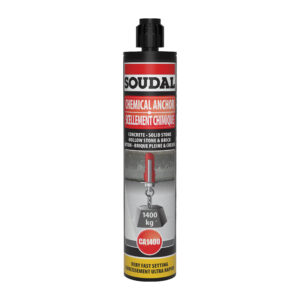
Soudafix VE400-SR is our high-performance vinyl ester resin. It’s C1-rated for seismic zones and works in both cracked and uncracked concrete. If you’re working on-site in wet or low-temperature conditions, it maintains its bond strength and cures quickly. For general-purpose masonry and uncracked concrete, Soudafix CA1400 offers a low-odour and styrene-free polyester resin. It’s a rapid-curing solution that’s completely waterproof once set.
Selecting the right resin ensures your project meets Australian building standards. These adhesives provide a permanent and airtight seal around the fixing, which prevents moisture from entering the hole and causing corrosion over time.
Ready to start your project? Use our Store Locator to find your nearest Soudal stockist and grab the right chemical anchoring tools today.
FAQs
What is the difference between Soudafix VE400-SR and CA1400?
Soudafix VE400-SR is a vinyl ester resin built for high-load and seismic applications. It can be used in cracked concrete and wet holes. Soudafix CA1400 is a polyester resin ideal for general-purpose fixings in masonry and uncracked concrete where seismic ratings aren’t required.
Can I use chemical anchors in wet holes?
Yes, but you must use a specific product like Soudafix VE400-SR. This formula is engineered to displace water and maintain a high-strength bond even in damp or water-filled holes. Standard resins may fail if moisture is present during the curing process.
How long does chemical anchor resin take to cure?
Curing times depend on the ambient temperature and the specific resin type. In warm conditions, some resins can set in as little as 10-20 minutes. Always check the timing chart on the side of the cartridge to ensure the resin has fully hardened before applying any load to the bolt.
Do I need a special caulking gun for these products?
Most of our chemical anchors fit into a standard heavy-duty caulking gun. However, because the resin is much thicker than standard silicone, we recommend using a gun with a high-thrust ratio. This makes application smoother and reduces fatigue during large installations.