
Key Takeaways:
Passive fire sealing stops the movement of fire, smoke, and toxic gases through construction gaps.
Effective compartmentation provides occupants with more time to evacuate during an emergency.
Intumescent sealants expand when heated to form a protective char layer that blocks flames.
Our range includes products tested to Australian standards for up to 4 hours of resistance.
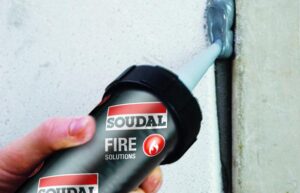
What is Passive Fire Sealing?
Passive fire sealing is a core part of modern building safety. It prevents fire and toxic gases from moving through joints and service penetrations in walls, floors, and ceilings. By maintaining the integrity of fire-rated compartments, you help contain a fire within its original area. This gives people more time to get out safely and helps emergency services do their jobs before the fire spreads.
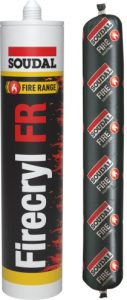
Soudal provides several high-performance options for Australian trade projects. Firecryl FR is a plasto-elastic acrylic sealant designed for internal gaps. It expands when exposed to temperatures above 120°C. This swelling creates an insulating char that seals the joint against smoke and flames. It’s waterproof after curing and you can paint it to match the surrounding wall.
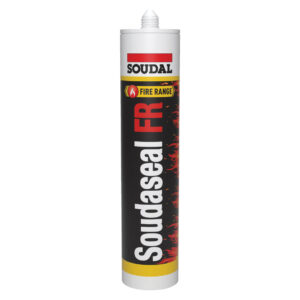
For more demanding environments, Soudaseal FR provides up to 4 hours of fire resistance. It’s an SMX hybrid polymer that handles UV exposure and high humidity. This makes it a great choice for both internal and external joints. It bonds strongly to concrete, brick, and plasterboard. Plus, it meets the strict AS 1530.4 testing standards used in Australia.
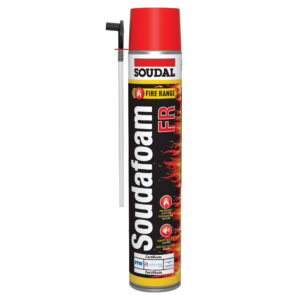
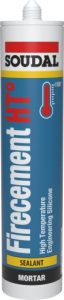
You can use Soudafoam FR HY to fill larger voids that require fire-rated insulation. For extreme heat areas like furnaces or chimneys, Firecement HT provides a hard-setting seal that withstands massive temperature spikes. Using the right combination of these products ensures your building meets all safety codes and protects lives.
Ready to start your project? Use our Store Locator to find your nearest Soudal stockist and grab the right fire-rated tools today.
FAQs
How does an intumescent fire sealant work?
Intumescent sealants like Firecryl FR contain special chemicals that react to high heat. When a fire occurs, the sealant swells to many times its original size. This creates a dense char layer that fills the gap and blocks the passage of flames and smoke for a specific period.
What is fire compartmentation?
Fire compartmentation is the practice of dividing a building into cells using fire-rated walls and floors. This limits the spread of fire to a single area. Passive fire joints are essential because they ensure the gaps between these walls and floors do not become weak points in the safety system.
Can I paint over fire-rated sealants?
Yes, most of our fire-rated sealants are paintable. Soudaseal FR can be overpainted with water-based paints once it has cured. This allows you to maintain the aesthetic of the room without compromising the fire safety of the joint.
Do fire-rated sealants stop smoke?
Yes, our fire sealants are designed to be smoke-tight. Smoke inhalation is often more dangerous than the flames themselves during a building fire. By creating an airtight seal in construction joints, these products prevent toxic gases from moving between rooms.