
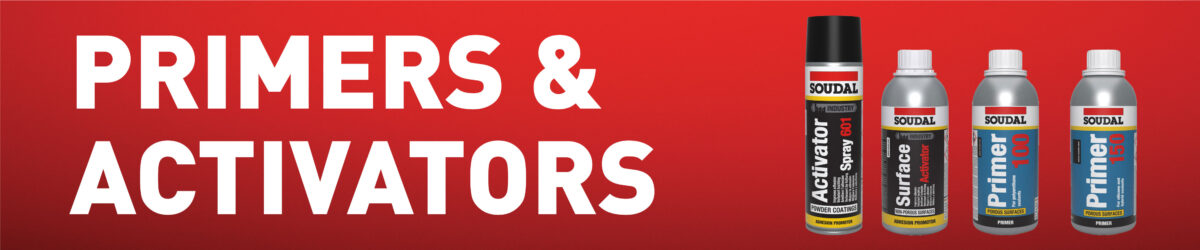
Adhesive Primers & Surface Activators
Primers and activators from Soudal prepare difficult substrates so sealants and adhesives develop full adhesion, covering surface primers for porous and non-porous materials and activators that speed cure or improve bond on specific surfaces. The range is used ahead of sealing and bonding where the substrate needs preparation beyond cleaning.
The step that decides whether the bond lasts or lets go.
Some substrates, including certain plastics, porous stone, fresh concrete, and specific metals, don’t give a reliable bond to sealant or adhesive without a primer or activator first. A surface primer improves adhesion and, on porous materials, seals the surface so the sealant bonds rather than soaks in. Activators accelerate cure or promote adhesion on surfaces where the product alone would struggle. Always check the sealant or adhesive datasheet to see whether a primer is required for the substrate. See the Sealants / Adhesives and Silicones ranges for the products these prepare surfaces for.
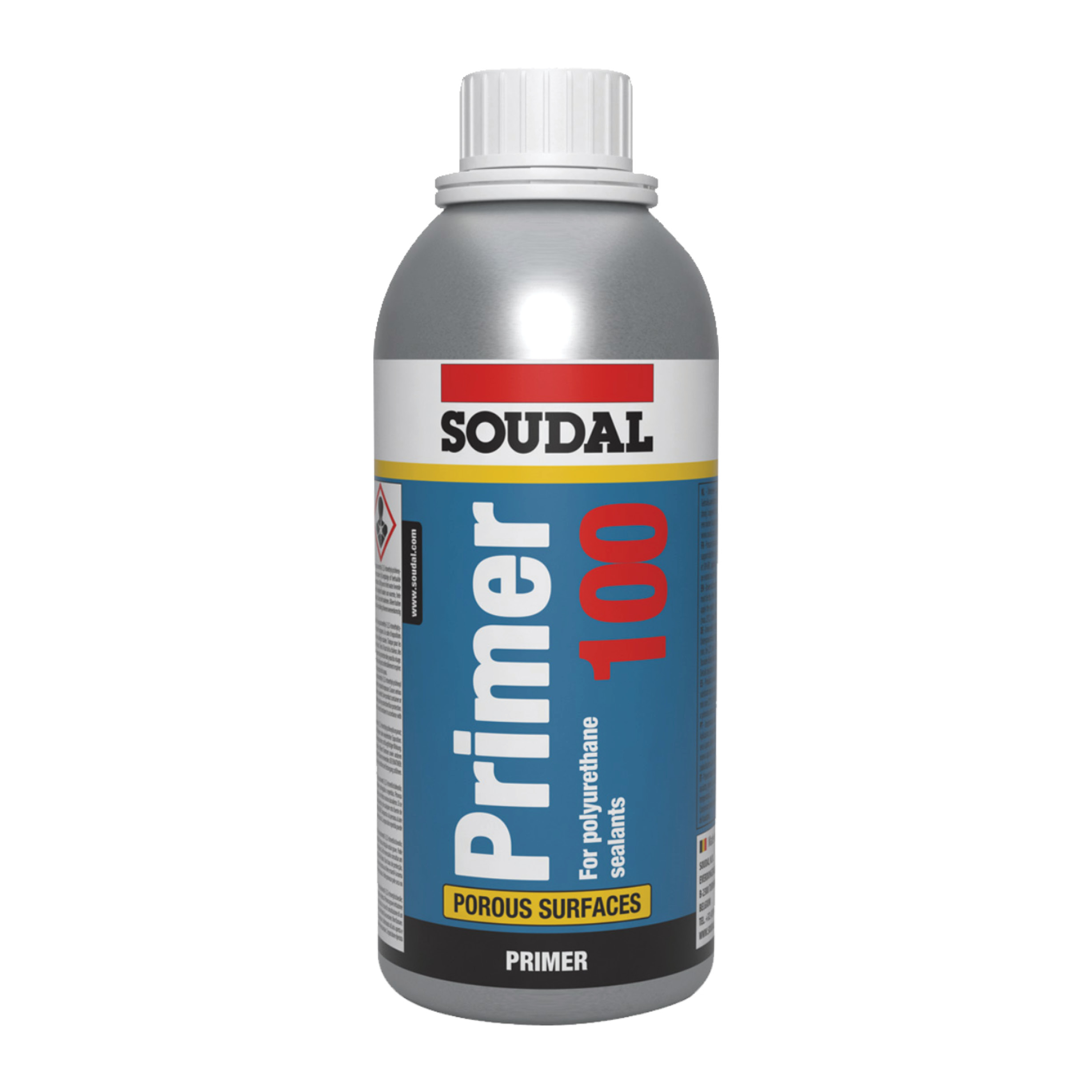
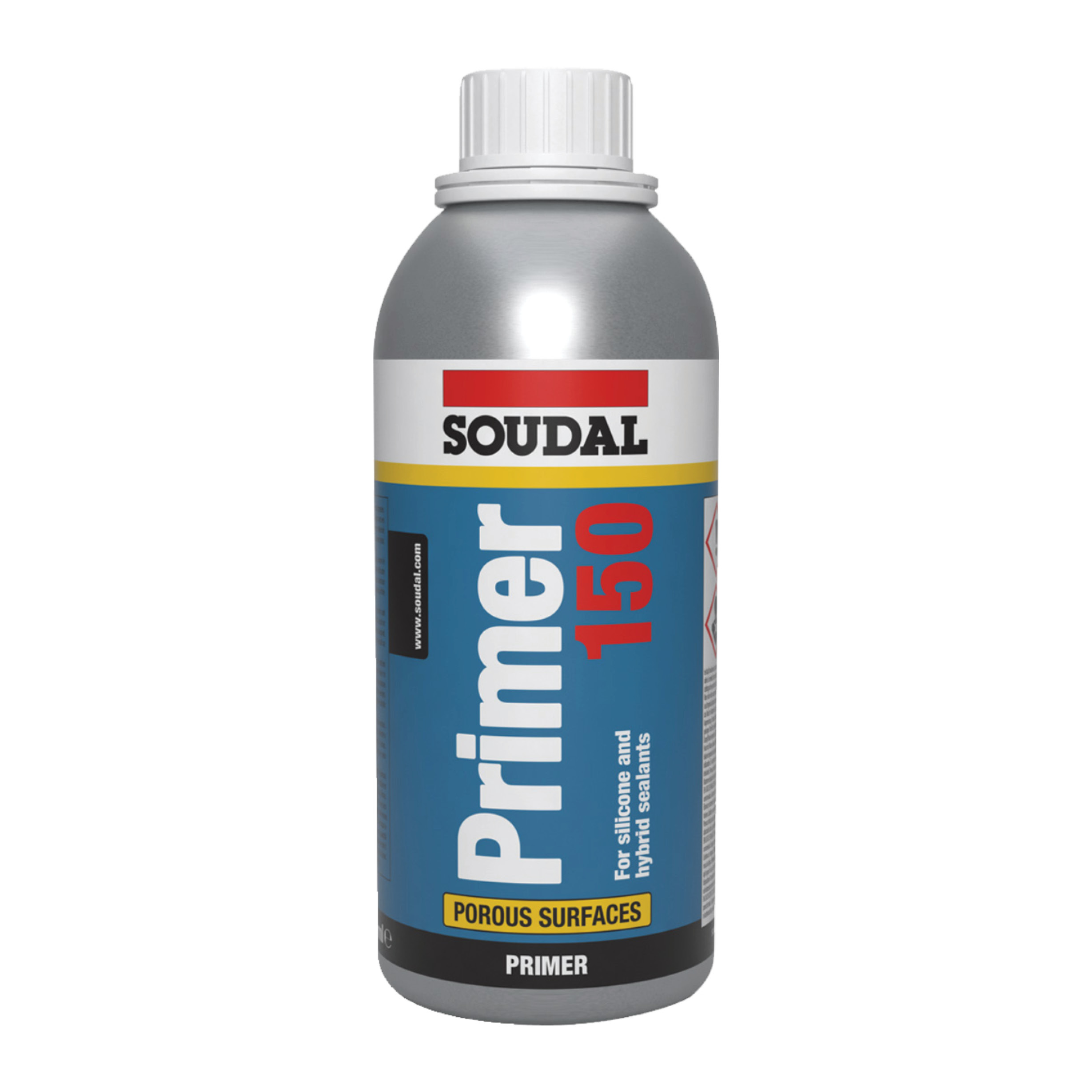
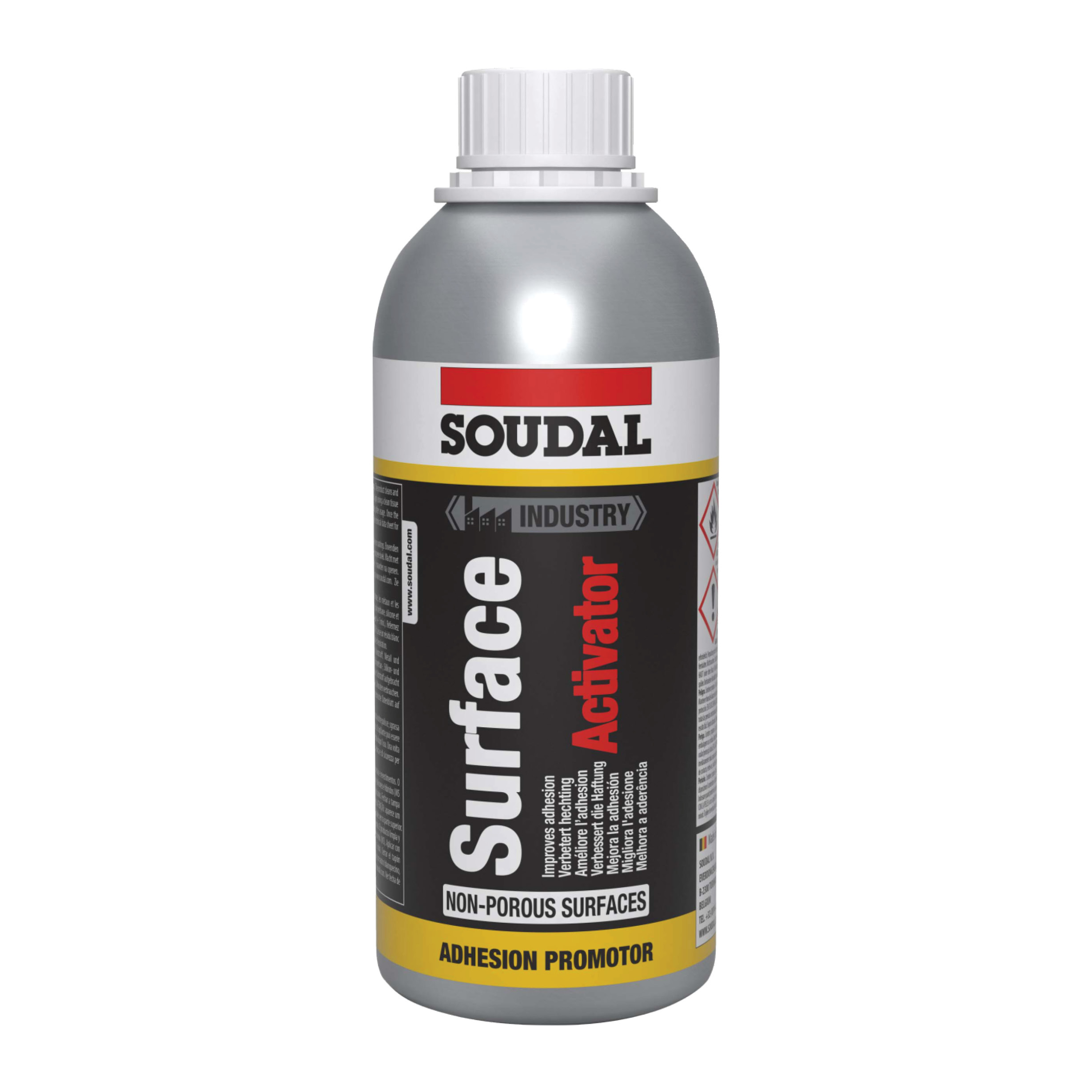
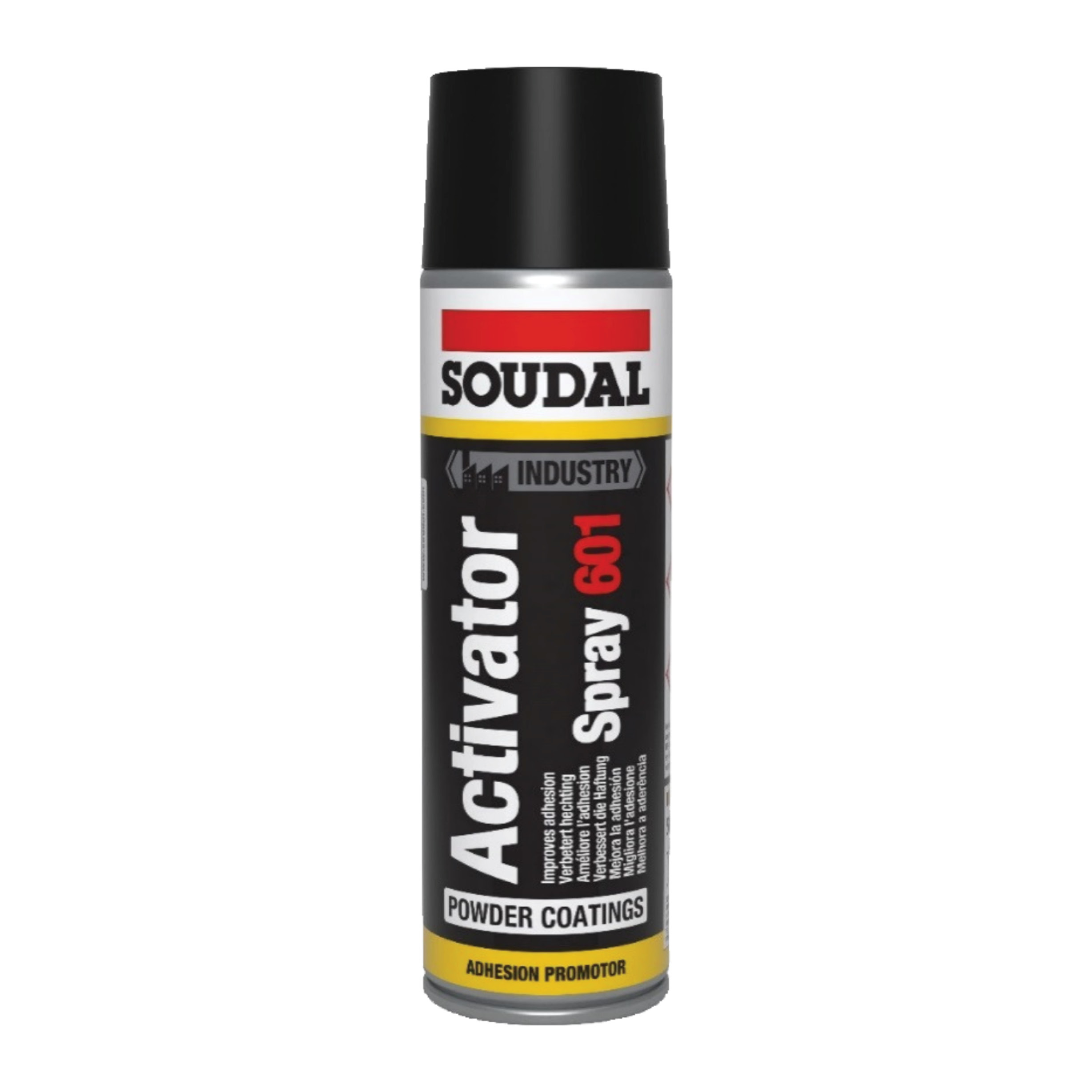
How to choose the right primer or activator
Selection is driven by the substrate and the sealant or adhesive being used, both of which the product datasheet specifies.
Porous substrates. A porous-surface primer seals and prepares materials like natural stone, concrete, and timber so the sealant bonds to the surface rather than soaking in.
Non-porous and difficult substrates. A non-porous primer or activator prepares materials like certain plastics, glass, and metals where the sealant or adhesive alone gives poor adhesion.
Substrate-specific systems. Windscreen and glazing systems use their own matched primers, which should be used rather than a general-purpose primer.
Technical differentiators
- Surface type: Porous-surface primers versus non-porous and substrate-specific primers and activators
- Function: Improving adhesion, sealing porous surfaces, or accelerating cure and grab
- Matched systems: Some products, such as windscreen adhesives, require their own matched primer rather than a general one
- Flash-off time: Primers need a stated flash-off time before the sealant or adhesive is applied
- Substrate guidance: The sealant or adhesive datasheet specifies whether a primer is required and which one
Application guidance
Check the sealant or adhesive technical datasheet first to confirm whether a primer or activator is required for the substrate, and which product to use. Clean and dry the surface before priming. Apply the primer thinly and evenly, and allow the stated flash-off time before applying the sealant or adhesive, since applying too soon or too late can reduce adhesion. Use matched primers where the system specifies them, particularly for glazing and windscreen work. Follow the ventilation and handling guidance on the product’s safety data sheet.
Where to buy
Find Soudal primers and activators through trade merchants and hardware stores across Australia. Use our store locator to find your nearest stockist, or contact us for technical advice on your project.
Primers & Activators FAQs
When do I need a primer for sealant?
A primer is needed on substrates where the sealant alone gives poor adhesion, including certain plastics, porous stone, fresh concrete, and specific metals. The sealant’s technical datasheet specifies whether a primer is required and which one.
Can I use any primer with any sealant?
No. Primers are matched to the substrate and the sealant or adhesive system. Use the primer specified on the product datasheet, particularly for glazing and windscreen systems that require their own matched primer.
How long should primer dry before sealing?
Each primer has a stated flash-off time before the sealant or adhesive is applied. Applying too soon or leaving it too long can both reduce adhesion, so follow the datasheet timing.
Do porous surfaces always need a primer?
A primer is needed on substrates where the sealant alone gives poor adhesion, including certain plastics, porous stone, fresh concrete, and specific metals. The sealant’s technical datasheet specifies whether a primer is required and which one.